Why Corporate Philanthropy Matters: An Overview to Corporate Social Obligation
Company philanthropy functions as an important part of corporate social obligation. It mirrors a company's commitment to social issues and improves its public photo. Businesses engaging in kind initiatives frequently see enhanced staff member morale and stronger neighborhood connections. The true effect of these campaigns can be intricate and diverse. Comprehending the nuances of business philanthropy can brighten its relevance in today's service landscape. What are the critical variables that drive its success?
The Definition of Corporate Philanthropy
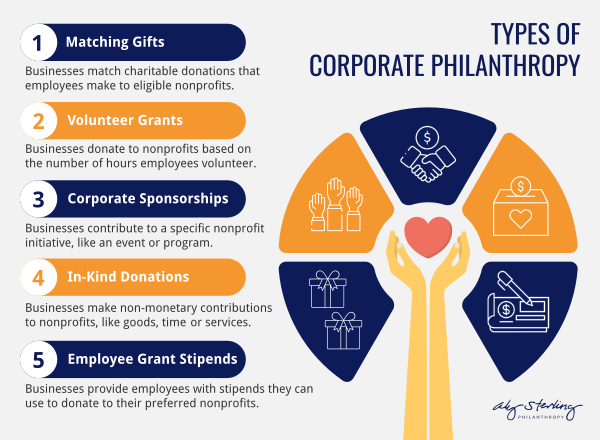
Corporate philanthropy refers to the charitable contributions and initiatives undertaken by businesses to support social causes and community development. This principle incorporates a selection of tasks, consisting of monetary donations, employee volunteer programs, and in-kind gifts of solutions or items. Business engage in philanthropy to deal with social issues such as education and learning, healthcare, environmental sustainability, and hardship alleviation.
Typically, company philanthropy is structured via formal programs or partnerships with not-for-profit companies, enabling businesses to utilize their sources efficiently. These initiatives often intend to make a positive impact on the area while lining up with the company's worths and objective. In addition, business philanthropy reflects a commitment to corporate social obligation, showcasing exactly how businesses can add to culture past earnings generation. By taking part in kind efforts, firms can play a considerable role in cultivating social change and resolving neighborhood demands.
Benefits of Company Philanthropy for Companies
Involving in corporate philanthropy deals various benefits for businesses, boosting their credibility and cultivating stronger neighborhood connections. Companies that actively take part in philanthropic efforts often experience boosted staff member morale and loyalty. When workers regard their organization as socially liable, they are more likely to feel happy with their office, resulting in higher degrees of work complete satisfaction and retention.
Additionally, company philanthropy can create important networking chances. Working together with non-profits and neighborhood organizations enables services to get in touch with like-minded individuals and groups, potentially resulting in partnerships that can benefit both parties. Additionally, businesses engaged in philanthropy may find themselves more appealing to stakeholders and financiers who prioritize moral techniques.
Inevitably, company philanthropy not only supports societal demands yet likewise offers tangible benefits to organizations, developing a win-win situation that promotes development and sustainability while adding positively to the world.
Enhancing Brand Name Commitment Through Social Responsibility
Enhancing brand name loyalty through social duty includes building trust fund with consumers by aligning company actions with community worths (corporate philanthropy). Business can foster deeper connections via neighborhood engagement campaigns that resonate with their target market. Furthermore, authentic brand narration can even more reinforce loyalty by showcasing genuine commitment to social reasons
Building Trust Fund With Activity
Building depend on through activity is an effective method that firms can carry out to strengthen brand commitment and foster deeper connections with customers. When businesses proactively involve in business philanthropy, they show a commitment to honest techniques and social obligation. This proactive technique not just enhances their reputation however additionally resonates with customers that prioritize values placement. Transparency in humanitarian initiatives is important; business must successfully connect their initiatives and the effect they are making. Credibility plays a significant function also; customers are more probable to support brands that really care about societal issues instead of those that take part in shallow marketing. Ultimately, by prioritizing significant activities over plain words, companies can nurture enduring trust and loyalty among their customer base.
Community Engagement Initiatives
Authentic Brand Name Narration
Community interaction efforts frequently offer as a structure for genuine brand name storytelling, which plays a significant function in cultivating brand name commitment. By This Site sharing real stories concerning their social responsibility efforts, companies can link mentally with customers. These tales highlight the brand name's worths, mission, and commitment to social enhancement, promoting trust fund and relatability. They are much more likely to establish a deeper affinity and preference for it when customers regard a brand name as socially liable - corporate philanthropy. Genuine storytelling also encourages transparency, welcoming customers to engage with the brand on a personal degree. As an outcome, services not only improve their online reputation yet likewise develop long lasting relationships with their audience, inevitably causing boosted commitment and campaigning for in an affordable market
The Function of Workers in Corporate Philanthropy
Employees play an important role in shaping a company's kind initiatives through their involvement and engagement. Efficient employee involvement methods can enhance volunteerism, bring about purposeful neighborhood impact. As companies harness the collective power and enthusiasm of their workforce, they can cultivate a culture of offering that extends beyond the workplace.
Worker Involvement Methods
Involvement in business philanthropy cultivates a sense of function that extends beyond plain profit-making. Companies can improve staff member involvement by applying various methods that encourage involvement in kind initiatives. One efficient strategy is to develop a matching gift program, where the business matches staff member donations to eligible charities, magnifying their influence. Additionally, routine interaction concerning philanthropic efforts can produce recognition and inspire employees to contribute their time and resources. Giving systems for employees to share their charitable interests fosters a sense of ownership and area. Recognizing and rewarding employees for their philanthropic contributions can also reinforce a society of giving, eventually causing a much more engaged workforce aligned with the company's social duty objectives.
Volunteerism and Area Effect
Business philanthropy flourishes when individuals actively join volunteerism, straight influencing the communities they offer. Staff member participation in volunteer initiatives not only boosts business culture but additionally cultivates a sense of purpose and link amongst personnel. Through offering, staff members establish necessary skills, such as teamwork and management, which can equate right into enhanced job efficiency. Furthermore, when employees join for neighborhood causes, they reinforce their bond with the organization, boosting general morale and commitment. Organizations that encourage volunteerism usually see a favorable public image, as neighborhood engagement mirrors their commitment to social duty. Inevitably, the collective influence of worker volunteer initiatives can change neighborhoods, attending to pushing social problems while enhancing corporate worths and mission.
Measuring the Impact of CSR Initiatives
As organizations progressively buy company social responsibility (CSR) initiatives, understanding their effect ends up being essential for assessing efficiency and assisting future initiatives. Determining the effect of CSR needs a complex strategy, including both measurable and qualitative metrics. Trick efficiency signs (KPIs) such as neighborhood interaction levels, employee complete satisfaction, and environmental improvements provide valuable understandings right into the results of CSR programs. Surveys and interviews with stakeholders can reveal the social adjustment created by these efforts, while data analysis aids track development against set purposes.
In addition, lining up CSR goals with business purposes improves accountability. Organizations can utilize structures such as the Worldwide Coverage Campaign or the UN Sustainable Development Goals to standardize their dimension processes. Inevitably, accurate assessment of CSR initiatives not just demonstrates a company's commitment to social duty but additionally educates technique adjustments to make the most of favorable effect, promoting a society of sustainability and neighborhood involvement.
Best Practices for Executing Efficient CSR Methods
Carrying out effective CSR strategies needs a clear understanding of an organization's worths and objectives, assuring alignment Going Here with stakeholder assumptions. Effective firms begin by performing an extensive assessment of their social, environmental, and financial impacts, permitting them to identify locations for renovation. Stakeholder engagement is vital; companies should actively include employees, clients, and neighborhood participants in the growth and execution of CSR efforts.
Openness is an additional best method, as it cultivates trust and accountability. Business need to communicate their CSR objectives and development honestly, sharing both challenges and successes. Additionally, integrating CSR into the core organization approach boosts its impact, making it an essential element of operations as opposed to an afterthought. Routine analysis and adaptation of CSR efforts, notified by stakeholder feedback and changing societal demands, warranty importance and efficiency. By sticking to these methods, organizations can create meaningful and lasting CSR techniques that resonate with their areas.
Regularly Asked Concerns
Exactly How Can Small Businesses Join Company Philanthropy?
Local business can take part in corporate philanthropy by contributing a percent of revenues, funding local occasions, partnering with nonprofits, providing employee volunteer days, and involving in social work activities, cultivating a positive impact and improving their brand name credibility.
What Are Typical Mistaken Beliefs Concerning Corporate Philanthropy?
Common mistaken beliefs concerning corporate philanthropy include the belief that it's exclusively an advertising and marketing tool, that only big firms can get involved, which it does not have genuine effect. Lots of underestimate the value local business can add with purposeful involvement.
Just How Do Customers Perceive Firms Participated In Philanthropy?
Customers frequently useful site see business engaged in philanthropy positively, associating such efforts with corporate responsibility, moral actions, and area assistance. This assumption can improve brand loyalty, influence buying decisions, and boost total business track record in the market.
Are There Tax Advantages for Services Included in Philanthropy?
Companies involved in philanthropy frequently enjoy numerous tax advantages, such as deductions for charitable payments. corporate philanthropy. These rewards can enhance a firm's monetary standing while promoting a favorable public image via their neighborhood engagement initiatives
Can Corporate Philanthropy Improve Worker Retention Rates?
Company philanthropy can improve employee retention prices by fostering a feeling of function and belonging amongst personnel. Involved workers, aligned with business values, are more probable to remain fully commited and pleased within their duties.
Business philanthropy offers as a crucial component of company social responsibility. Business philanthropy refers to the philanthropic contributions and campaigns carried out by organizations to support social causes and area development. Furthermore, company philanthropy reflects a dedication to company social responsibility, showcasing exactly how organizations can contribute to society past earnings generation. Engaging in business philanthropy offers countless advantages for services, boosting their reputation and promoting stronger neighborhood connections. Customers frequently check out firms engaged in philanthropy positively, connecting such initiatives with company responsibility, ethical behavior, and neighborhood support.
Comments on “The role of corporate philanthropy in reinforcing public-private partnerships”